

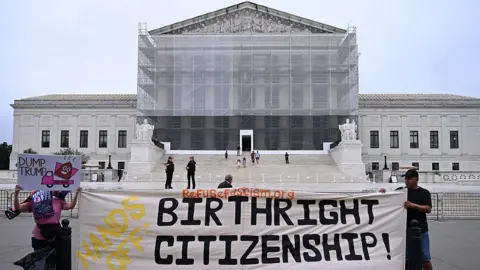
The top court has agreed to take on a landmark case that questions a historic guarantee: birthright citizenship for those born on American soil.
On his first day in office this winter, the administration issued an executive order aiming to end this practice, but the action was struck down by the judiciary after legal challenges were initiated.
The Supreme Court's final judgment will either affirm citizenship rights for the offspring of migrants who are in the US illegally or on short-term permits, or it will end the provision altogether.
Next, the court will calendar a session to hear oral arguments between the administration and plaintiffs, which comprise parents who are immigrants and their young children.
A Constitutional Cornerstone
For more than 150 years, the Fourteenth Amendment has enshrined the doctrine that all individuals born in the nation is a US citizen, with specific conditions for children born to embassy personnel and personnel of occupying armies.
"Anyone born or naturalized in the United States, and subject to the jurisdiction thereof, are citizens of the United States."
The challenged executive order sought to withhold citizenship to the children of people who are either in the US in violation of immigration law or are in the country on non-permanent visas.
The United States is among about a minority of states – mostly in the Western Hemisphere – that award automatic citizenship to any person born on their soil.


